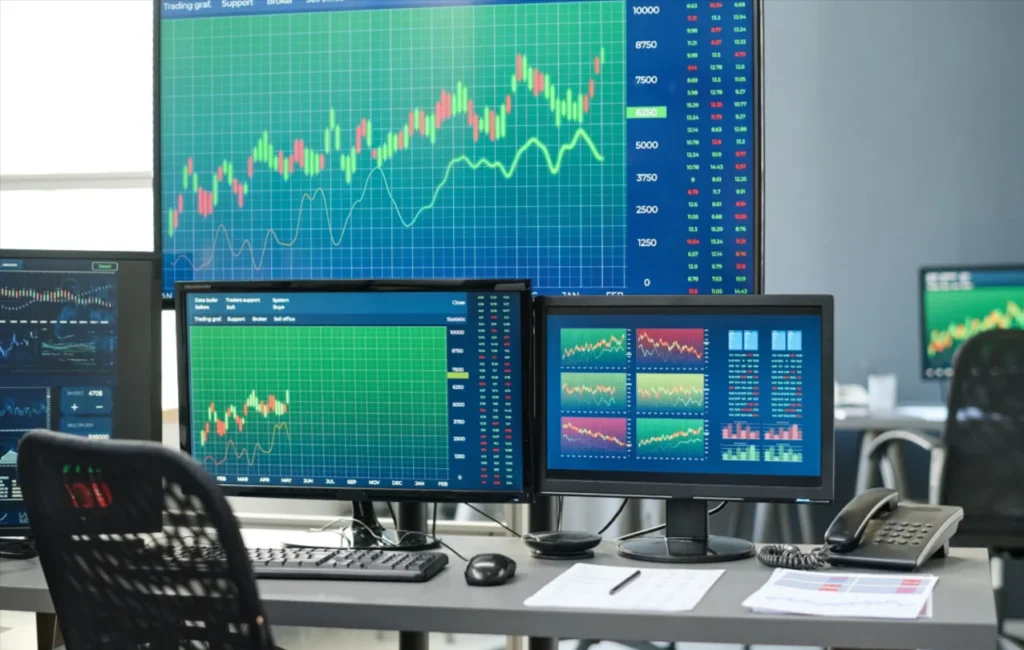

In today’s digital age, trading has transcended the traditional confines of a physical trading floor. With the advent of advanced technology, people can engage in trading activities on a wide variety of devices. This article will delve into the details of trading on different devices, highlighting their features, advantages, and limitations.Bitget TradFi lets users Trade on various devices with support for phones, tablets, and desktop systems. The page lists iOS and Android for mobile access, plus Mac OS and Windows for desktop, enabling position monitoring and order management without being tied to a single workstation.
Desktop Computers
Desktop computers have long been a popular choice for traders. They offer a large screen, which is beneficial for analyzing complex charts and multiple data sets simultaneously. Traders can install professional trading software on desktops, which often come with advanced features such as real – time market data, technical analysis tools, and customizable dashboards. Moreover, desktops usually have more powerful processors and larger memory compared to other devices, enabling smooth and efficient trading operations. However, the drawback is that desktops are not portable, which restricts traders to a fixed location.
Laptops
Laptops provide a good balance between portability and functionality. Traders can take their laptops anywhere, allowing them to trade while on the go. They offer a similar range of trading software as desktops, and with the development of high – speed internet, real – time trading is just as seamless. Laptops also come with decent screen sizes, which are suitable for detailed market analysis. Nevertheless, laptops have limited battery life, and their performance may be affected by factors such as overheating during long – term use.
Tablets
Tablets are becoming increasingly popular among traders. They are lightweight and easy to carry, making them ideal for traders who need to stay connected to the market at all times. Many trading platforms have developed dedicated tablet apps, which offer a user – friendly interface and essential trading functions. Tablets also support touch – screen operation, which can enhance the trading experience. However, the smaller screen size may pose challenges when analyzing complex market data, and the processing power is generally lower than that of desktops and laptops.
Smartphones
Smartphones are the most accessible device for trading. Almost everyone has a smartphone, and trading apps on smartphones allow traders to execute trades instantly, monitor market movements, and receive real – time alerts. They are extremely convenient for quick trades and staying updated on the market while on the move. However, due to the small screen size, in – depth market analysis can be difficult. Also, the limited storage and processing power may lead to slower app performance during peak trading hours.
In conclusion, each device has its own unique features and trade – offs when it comes to trading. Traders should choose the device that best suits their trading style, needs, and preferences. Whether it’s the power of a desktop, the portability of a laptop, the convenience of a tablet, or the accessibility of a smartphone, the key is to make the most of the device’s capabilities to achieve successful trading.